
Fun facts
/ Fun facts
Why Do Beijingers Ask “Have You Eaten?”
Imagine walking through a quiet alley in Beijing. A friendly older neighbor sees you and smiles “吃了吗?” (Chī le ma?) — “Have you eaten?”
Written by: Scarlett J.H. | Fun facts | Share:

If you’re new to China, you might pause and wonder: Is this an invitation? Should I say what I had for lunch?
Not exactly. In Beijing, especially among older generations—“吃了吗?” has long been one of the most familiar and warm ways to say hello.
It’s not really about food. It’s about connection.
For many longtime Beijingers, especially those who grew up in traditional neighborhoods known as hutongs, daily life was deeply social. Neighbors knew each other well. People chatted in courtyards, shared stories outside their homes, and everyday greetings felt personal rather than formal. Instead of saying a simple “hello”, people often asked something more human: “Have you eaten?”
Because in Chinese culture, food has always meant much more than just eating. Food represents comfort, care, hospitality, and family. Asking whether someone had eaten was a natural way of showing concern—similar to asking: “How are you?” or even “Are you doing okay?”
In old Beijing, this kind of greeting felt especially natural because life centered so much around neighborhood relationships and shared daily routines.
Of course, if someone asks this in modern Beijing, they usually aren’t expecting your full breakfast report. A simple smile or greeting back is enough. That said, context matters.
If a Chinese friend says “吃了吗?要不要一起吃?” (Have you eaten? Want to join us?)—then yes, that may be a real invitation. That’s part of the charm.
For foreign learners, this can be one of those unforgettable “wait… what?” cultural moments. You may start explaining: “I had eggs and coffee…” while the other person was simply saying hello.
But that’s exactly why cultural understanding matters. Language isn’t always literal. Sometimes words carry history, habits, and emotions that don’t appear in a dictionary.
At Mandarin9, we believe learning Chinese should help you understand those hidden meanings—not just memorize vocabulary.
Because when an old Beijinger asks: “吃了吗?” They may not be asking about food at all. They’re offering something much warmer: A small moment of human connection.

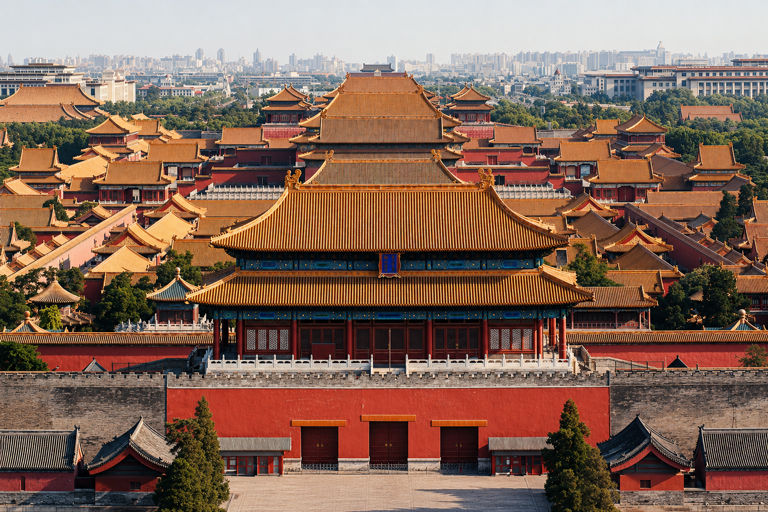
In many cultures, numbers carry symbolic meaning, but in China, numbers have long been woven in to architecture, philosophy, language, and even imperial power. Among them all, 9 stands apart.
Why Do Beijingers Ask “Have You Eaten?” Imagine walking through a quiet alley in Beijing. A friendly older neighbor sees you and smiles “吃了吗?” (Chī le ma?) — “Have you eaten?”

In Chinese culture, it’s the opposite. The family name comes first, followed by the personal name. So Wang Xiaoming means: Wang (王) = family name Xiaoming (小明) = personal name